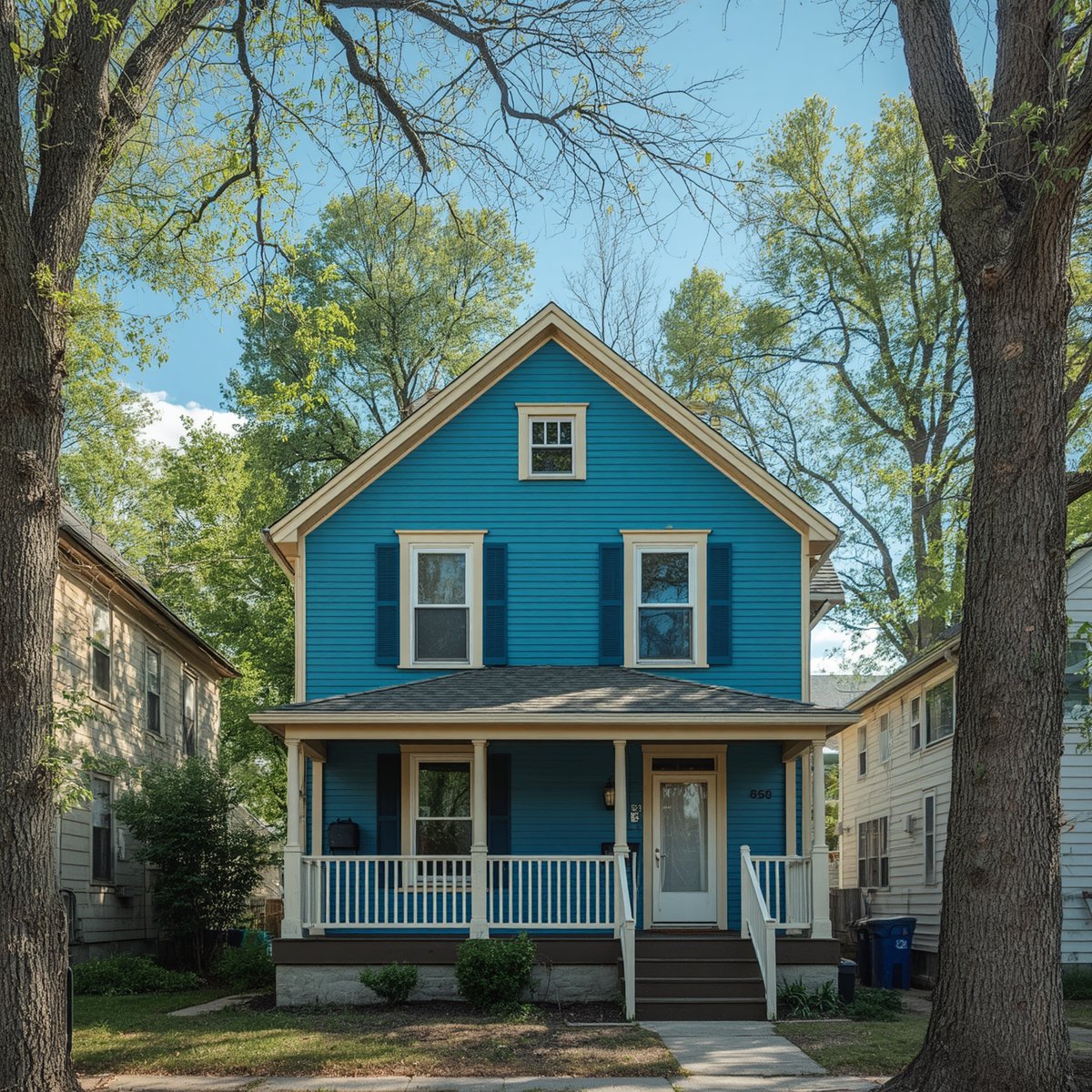
Can You Actually Build Wealth With One Rental Property?
October 29, 2026
October 29, 2026
Spend enough time around real estate investing content and you can start to feel wildly behind.
Someone bought 10 doors by 30.
Someone else owns 47 units.
Another investor is explaining how they went from zero to a multimillion-dollar portfolio in five years.
Meanwhile, you're wondering whether you could reasonably afford one rental property.
Here's the part that gets lost in all that scale:
One good property held for a long time can still become a meaningful financial asset.
It probably won't make you financially independent next year.
It doesn't need to.
The better question isn't whether one rental property can make you rich.
It's:
What could one strategically chosen property do for your financial life over the next 10, 20, or 30 years?
That answer can be much more interesting.
One of the reasons rental property performance can be confusing is that investors tend to focus on whichever number is easiest to see.
Usually, that's monthly cash flow.
You collect $2,500 in rent.
You pay the mortgage and expenses.
There's $300 left.
So the property "makes" $300 per month.
Cash flow matters.
But if you're evaluating a long-term rental, it may be only one part of what the property is doing for you.
A rental property can potentially build wealth through:
Not every property will deliver all four particularly well.
And none should be treated as guaranteed.
But understanding the different ways a property can create value helps explain why an investment producing a few hundred dollars per month can still become significant over time.
Imagine you purchase a $350,000 rental property.
You put 20% down, or $70,000.
We'll assume additional money is available for closing costs and appropriate reserves rather than pretending your down payment is the only cash you'll ever need.
You finance the remaining $280,000.
After rent and the expenses you've realistically accounted for, let's say the property averages $250 per month in cash flow.
That's $3,000 per year.
If we stop there, investing $70,000 plus closing costs and reserves to make $3,000 per year may not sound particularly exciting.
And honestly, if cash flow were the only benefit, we might agree.
But now let's zoom out.
Part of each mortgage payment on a typical amortizing loan goes toward principal.
Over time, that reduces what you owe.
Suppose years from now your $280,000 mortgage balance has fallen substantially.
That additional equity didn't arrive in your checking account each month, so it's easy to overlook.
But it still affects your net worth.
This is one of the unusual characteristics of leveraged rental real estate.
You contribute the initial capital.
The property generates income.
And when things work as intended, part of that income helps reduce debt attached to an asset you own.
Of course, rent isn't guaranteed, expenses happen, and you remain responsible for the mortgage regardless of whether the property is occupied.
But over a long enough ownership period, principal reduction can become a meaningful part of the investment.
Now imagine the $350,000 property appreciates over time.
We would never build an investment strategy around assuming an aggressive appreciation rate.
But let's use a hypothetical 3% annual average simply to understand the mechanics.
Three percent of your original $70,000 down payment would be $2,100.
But you don't own a $70,000 asset.
You own a $350,000 property with financing attached to it.
Three percent of $350,000 is $10,500.
That's one reason leverage can make real estate powerful.
Your potential appreciation is based on the value of the asset, not simply the cash you originally contributed.
It works in the other direction too.
If the property's value falls, you still owe the mortgage.
Leverage doesn't create returns. It magnifies what happens to the asset you chose.
That's why buying the right property matters considerably more than simply buying one.
Let's stay with our hypothetical property.
You bought it for $350,000.
You started with a $280,000 mortgage.
It generated some cash flow along the way.
The loan balance gradually declined.
The property potentially appreciated over time.
Now imagine looking at the same asset 20 years later.
Even without building a giant portfolio, you may own a property worth substantially more than when you purchased it, with substantially less debt attached to it.
At that point, you have options.
You could keep collecting rental income.
You could eventually pay off the mortgage and potentially increase cash flow.
You could sell.
You could potentially borrow against some of the equity, depending on your circumstances and lending conditions.
You could explore whether exchanging the property into another qualifying investment makes sense.
Or you could simply continue owning it.
The real value of one rental property may eventually be less about the rent check and more about the options the asset creates.
This is where we'd add an important warning.
You've probably heard some version of:
"Just buy real estate and hold it. You'll be fine."
We don't think that's a strategy.
Time can be incredibly powerful when applied to a good asset.
It can also give a bad decision 20 years to annoy you.
If you dramatically overpay, underestimate expenses, buy something with persistent maintenance problems, choose a property with weak rental demand, or take on financing you can't comfortably support, holding longer doesn't automatically solve those problems.
The goal isn't simply to own a property for decades.
It's to own something worth holding.
There's another mistake we want first-time investors to avoid.
Suppose your property produces $300 per month after the obvious bills.
It can be tempting to treat that $300 as income available to spend.
Then the water heater goes.
Then the property sits vacant between tenants.
Then a roof needs replacing.
Rental properties have expenses that don't arrive politely on a monthly subscription.
That's why we'd want maintenance and capital reserves incorporated into the analysis from the beginning.
If you aren't reserving realistically for future costs, what looks like cash flow may actually be money the property hasn't asked for yet.
Good investing gets much less exciting when you account for everything. That's usually a good sign.
There's another return from the first property that won't appear on your balance sheet.
Information.
You learn what owning rental property actually feels like.
Do you enjoy analyzing properties?
How comfortable are you with debt?
Do you like managing tenants?
Would you rather pay someone else to do it?
How do you respond when something breaks?
Do you enjoy owning older properties, or would you gladly accept a different return for less maintenance?
How much liquidity helps you sleep comfortably?
Would you rather own several smaller properties or eventually consolidate into fewer assets?
Your first investment doesn't just build equity.
It helps you become a better investor.
And sometimes what you learn is:
I don't want another rental property.
That's useful information too.
There's a strange assumption in real estate investing that once you buy one property, the goal should be to acquire the next one as quickly as possible.
Then the next.
Then the next.
That may be exactly the right strategy for someone trying to build a large rental portfolio.
It isn't a requirement.
Imagine a professional who already has:
A strong income.
Retirement accounts.
Other investments.
A primary residence.
And one well-performing rental property.
Maybe that rental eventually provides additional retirement income.
Maybe it becomes an asset they leave to their children.
Maybe they sell it later and use the proceeds toward something else.
Maybe it becomes the beginning of an international property purchase that serves both an investment and lifestyle goal.
The rental doesn't have to become a real estate empire to have been worthwhile.
You are allowed to use real estate as part of your wealth strategy without making real estate your entire identity.
This is where we wouldn't let the romance of owning a rental take over.
Suppose buying the property requires $90,000 between the down payment, closing costs, initial improvements, and reserves.
That $90,000 has alternatives.
You could invest it elsewhere.
Pay down debt.
Keep more liquidity.
Invest in your business.
Increase contributions to other investment accounts.
Or use it toward another financial priority entirely.
So the question isn't:
Can this rental property make money?
It probably can under the right circumstances.
The question is:
Does what this property could reasonably produce justify putting this much of your money here instead of somewhere else?
That's a higher standard.
It should be.
If your goal isn't to build a giant portfolio and you simply want one strong real estate investment, we'd take that seriously.
In some ways, property selection becomes even more important.
Here's what we'd want to understand.
Additional retirement income?
Long-term appreciation?
Diversification?
Something to leave your children?
Future flexibility?
There is no reason to evaluate the property until we know what job it's supposed to do.
Not just when the tenant pays on the first.
What happens during a vacancy?
What happens when the furnace fails?
What happens if your household income changes?
The property should fit your financial life without requiring perfect circumstances.
Use actual rental comparables.
Account for real expenses.
Build in vacancy and maintenance.
Understand financing.
Don't rely on aggressive appreciation to make an average property look exceptional.
This is a surprisingly useful test.
Remove the fantasy of eventually owning 20 properties.
Is this individual asset still worth owning?
If yes, we're getting somewhere.
Compare the rental against a real alternative.
Not an imaginary investment with enormous returns and no risk.
What would you realistically do with the capital if you didn't buy this property?
That gives us an actual decision to evaluate.
We often talk about the "first investment property" as though its only purpose is to get you to the second.
But what if it isn't?
What if you buy one excellent rental at 35, hold it for 25 or 30 years, allow the mortgage to amortize, manage it responsibly, and eventually reach retirement with another substantial asset on your balance sheet?
That could be an extraordinarily successful outcome.
Or maybe five years into ownership, the equity creates an opportunity you hadn't anticipated.
Maybe that one property does become three.
Maybe it helps fund another investment.
Maybe your strategy expands into another state or another country.
You don't need to know that today.
Your first investment property doesn't need to determine the size of your future portfolio. It needs to be a good decision on its own.
This may be our favorite part of this conversation.
Wealth building is often remarkably boring from the outside.
One property.
One tenant.
One mortgage payment at a time.
Reserves sitting untouched.
Repairs handled when they happen.
Years passing.
No dramatic before-and-after reel required.
And eventually, something that once felt like a fairly ordinary purchase can represent a meaningful amount of equity, income, and financial flexibility.
So yes, you can absolutely build wealth with one rental property.
But we wouldn't buy one simply because real estate builds wealth.
We'd buy one because this particular property, with these numbers, fits the financial life you're trying to build.
If it does, one may be plenty.
And if it eventually creates the opportunity for something bigger, you can make that decision when you get there.
That's exactly the kind of decision we're here to help you think through.
Stay up to date on the latest real estate trends.

Buying
You Have More Options Than You Think

International Real Estate
Selling
How to Know When You’ve Outgrown the House, Not the Kitchen

Real Estate Career
Buying
Work with SAVIA to receive thoughtful guidance, strategic insight, and a coordinated approach to your real estate goals.